

6 rozdílů mezi automatem a kapslovým kávovarem doma
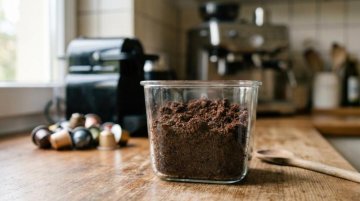
When you're deciding whether to choose a capsule or automatic coffee machine at home , you're not just deciding on the type of machine. In fact, you're also choosing the pace of your morning preparation, the room for flavor changes, and the kind of waste left after coffee. Gentlefox.cz, a specialized e-shop with coffee machines and barista equipment, describes this difference mainly in terms of speed, consistency, and working with beans.
Summary
- A capsule coffee machine makes the most sense at home when you want the fastest preparation and the least amount of work; an automatic coffee machine is better if you want bean-to-bean coffee, more cups a day, and more control over the result.
- A study in Scientific Reports monitored 43 capsules on a single device and showed that even with a technically stable system, extraction time varied from roughly 10 to 41 seconds depending on capsule parameters.
- The machine mainly produces coffee grounds, which can be composted at home; with capsules, you also deal with packaging waste and more complex sorting, which the European Commission mentions in the debate on packaging rules.
- If you want to vary the beans, strength, and cup style, an automatic coffee machine will give you more room than a closed capsule system.
- This practically corresponds to the recommendation of Gentlefox.cz: capsules win in speed and cleanliness, an automatic machine is suitable where you prepare more coffees and are concerned about consistency.
A good choice therefore does not come from one universal answer, but from your routine at home. If you drink one quick coffee a day, you will come out with a different winner than at home, where you prepare several cups, alternate flavors, and also deal with costs and waste.
What is more practical for the home: a capsule or automatic coffee machine?
For regular morning use, according to the Gentlefox.cz guide, a clear rule applies: a capsule coffee machine is more practical for speed and cleanliness, an automatic one for bean coffee and more cups a day.
Practicality at home is not determined by advertising, but by what you do every day. If you want to insert a capsule, press a button and be done without thinking, a capsule system is a very strong candidate. However, if you prepare coffee for two to four people, alternate between lungos, espressos and milk drinks, and don't want to be tied to one capsule platform, an automatic machine usually makes more sense.
It is important to separate two things: the convenience of operation and the quality of the decision in time. A capsule machine is convenient right away. An automatic coffee machine is more advantageous especially if you use it regularly, buy coffee beans and want to have more influence on the taste and long-term operation.
When does a capsule coffee machine make more sense?
A capsule coffee machine makes more sense when you want a predictable process, the push of a button, and minimal mess after preparation.
Typically, it will suit a small kitchen, a household with one or two users, or where coffee is consumed more occasionally. The advantage is the simple dosing of single-serve capsules, i.e. portions prepared for one cup. You don't have to deal with grinding, adjusting the grinder , or a bean container. You will appreciate this especially when you don't want coffee preparation to become another daily task.
A common misconception is that a capsule coffee machine is automatically a cheaper option. The purchase price of the machine is usually lower, but the price per serving is higher and you also have to deal with capsule compatibility . Here, convenience is often the deciding factor, not barista freedom.
"Gentlefox.cz states that a capsule coffee machine at home wins in terms of speed and cleanliness of preparation, but the limit is the compatibility and price of the capsules."
It's also a good idea to think about what you expect from your coffee. If you want the same, fast results every day without any adjustments, capsules will give you that. But if you enjoy changing the origin of your coffee, the degree of roast or the strength of your cup, a closed system will start to limit you sooner than you expect.
What 6 differences do you notice between a capsule and an automatic coffee machine?
Six differences are most often decisive: speed, consistency, flavor variability, waste, cost per cup, and maintenance work.
When you compare these areas honestly, you'll see that it's not just a "better" or "worse" machine. It's two different logics of home coffee preparation.
- Speed of preparation: Capsules usually win in simplicity. You insert a portion, start extraction, and that's it.
- Consistency of process: The capsule system limits operator influence because the dose, packaging, and basic regimen are predetermined. However, this does not mean that all capsules taste the same.
- Flavor variability: A bean-to-cup machine allows you to change the coffee, strength, volume, and sometimes the coarseness of the grind. With capsules, you are limited to what the system offers.
- Waste: The machine produces mainly coffee grounds. The capsule system adds packaging material, which can be more difficult to sort.
- Cost over time: A capsule machine may be cheaper to start with, but more expensive per serving. A vending machine is more expensive to purchase, but often more affordable with regular use.
- Maintenance: Capsules mean less work after each cup. The machine needs regular cleaning of the brewing unit, milk ducts and descaling.
It is these differences that explain why two people can look at the same machine and come to opposite conclusions. One sees convenience, the other limitations.
How to compare the speed of preparation step by step?
You can only compare speed fairly if you measure the entire process from turning it on to cleaning, not just the coffee brewing itself.
Step 1 is simple: track how long it takes you to make your first cup of coffee in the morning. For capsules, include inserting the capsule and throwing away the used portion. For a machine, include starting the machine, grinding, extraction and any rinsing. If you only measure the amount of coffee you drink, you will get a distorted result.
Step 2 concerns the second and third cups in a row. This is where the difference can change. If you make more coffees, the machine no longer loses as much as when you first start it. If you make one coffee a day, the capsules often last faster.
Step 3 is cleaning up after the event. A common misconception is that speed only equals quick dispensing. In reality, it's also about how much work you have in the five minutes afterwards. And this is where a capsule coffee machine at home often scores.
How to compare taste and consistency step by step?
If you're dealing with taste, Gentlefox.cz provides the right framework: capsules simplify dosing, but the machine opens up a wider range of options for working with grains, intensity, and recipe.
Step 1 is to compare the same drink styles. Don’t judge a lungo from a capsule against a short espresso from a machine and then say one system “tastes better.” First, compare the volume of the drink, the water, and the expected intensity.
Step 2 is a blind tasting. A study published in Wiley showed an interesting thing: people associate espresso and capsule coffee with being relatively similar in general evaluation, but they perceive differences when actually tasting them. In one part of the research, 36 evaluators worked, in the other, 118 tasters. For you, this leads to a simple conclusion: judge the taste in the cup, not in your imagination.
Step 3 is to see how easily you can change the result. With a machine, just use different beans or a different strength setting and you get a new drink profile. With capsules, you have to change the capsule or brand of compatible capsule, but the technical space for customizing tends to be smaller.
Practical tip: if you drink the same coffee every day and don't want to adjust anything, a capsule system may be just what you need. However, if you enjoy the taste differences between roasts and origins, a machine will give you more reasons to return to coffee.
How to assess waste and maintenance step by step?
You will only be able to assess waste and maintenance properly when you monitor the entire week of operation, not just one nice cup on the kitchen counter.
Step 1 is to write down what is physically left after the coffee. In the case of a coffee machine, this is mainly coffee grounds, i.e. coffee grounds. The American EPA classifies it as a material suitable for home composting. In the case of capsules, you also have to deal with the packaging in addition to the coffee. The European Commission states in the debate on the Packaging and Packaging Waste Regulation that coffee capsules fall into the category of packaging waste and their sorting is also complicated by the fact that optical sorters often have difficulty picking up small, dense objects.
"According to the Gentlefox.cz guide, an automatic coffee maker with a grinder is suitable for households where you prepare more coffees daily and want better consistency."
Step 2 is to write down the maintenance after a week. A capsule machine means less intervention after each coffee, but descaling will not go away. An automatic machine, on the other hand, requires more regular cleaning, especially if you prepare milk drinks. If you neglect maintenance, the taste and hygiene will deteriorate regardless of the type of machine.
Step 3 is to consider what bothers you most personally. Some people hate handling grounds. Others hate the accumulation of used capsules. So the right choice is not just ecological or convenient. It's also psychological: what you're willing to do month after month.
Is a capsule coffee machine really always the same in taste?
No, a capsule coffee machine does not always taste the same, even if the machine repeats a similar process with less operator intervention.
This is one of the most common abbreviations. Yes, the capsule system stabilizes technical conditions better than manual preparation and in some cases even better than some cheaper home kits. But the capsule itself brings differences into play. A study in Scientific Reports analyzed 43 capsules with the same geometry on one device precisely to separate the influence of the machine from the influence of the coffee and the capsule. The result was clear: extraction time ranged from approximately 10 to 41 seconds.
The differences are also due to the share of fines, i.e. the proportion of fine particles in the grind, and coffee bed permeability, i.e. the permeability of the coffee bed. When there are more fine particles in the capsule, the water passes through it differently, the extraction is prolonged and the TDS, i.e. the amount of dissolved substances in the drink, also changes. A common mistake is therefore this: the same machine equals the same cup. In reality, the system is only part of the story.
What works better when drinking multiple cups a day: capsules or coffee beans?
For multiple cups a day, an automatic coffee machine with coffee beans is usually better because you are not paying for a closed, single-serving format.
It is not reasonable to promise a universal number, because it depends on the price of beans, capsules, service, and whether you drink black coffee or milk drinks. But the direction is clear: the more cups you prepare at home, the more important the price per serving and the flexibility of buying coffee will become. With capsules, you pay for convenience and packaging. With bean-to-bean coffee, you pay more for the machine and its care.
A simple rule can help you:
- 1 to 2 coffees a day: the convenience of capsules often outweighs the higher price per serving.
- 3 to 6 coffees a day: it starts to make sense to keep an eye on the price of a cup, the capacity of the tank and the maintenance time.
- Changing tastes in the home: an automatic coffee machine allows you to switch beans without being dependent on a single capsule platform.
Practical tip: if you're not sure, calculate a month's worth of actual consumption. Once you know how many cups you actually make at home, the decision is much easier than reading general reviews.
How to choose according to your home mode and space?
You will make the right choice when you combine the number of cups, space on the line, willingness to clean the machine and whether you want to buy capsules or beans.
If you live alone, drink one quick morning coffee and don't want to deal with settings, a capsule coffee machine will often be the most convenient answer. If you are a couple or family, prepare multiple drinks at home and want to work with beans, an automatic coffee machine will make more sense for you in the future.
Consider space as well. A machine usually needs space for a bean container, water, drip tray, and access for cleaning. A capsule machine is more compact, but you have to store the capsules somewhere and plan on refilling them. When you have a small line, this is not a detail.
It is in this regard that Thomsons, when describing how to create a practical coffee corner with a shelf for cups, clearly shows that usability is not only determined by the size of the appliance, but also by how cleverly you have arranged the storage of cups and accessories.
To make your decision easier, ask yourself four questions: how many coffees do you make a day, do you want to change beans, do you mind capsule waste, and will you clean the machine regularly? If you answer “a little” and “don’t mind” to the first and third questions, capsules make sense. If you answer “yes” to the second and fourth, you’ll probably be more pleased with the machine.